Coal-Cooked Mutton
Mutton fried until browned, then wrapped in foil with whole garlic, ginger, tomatoes, onions and green chilies and buried in hot coals until fully tender.
By Steak House Diaries Kitchen Desk | Published | Updated
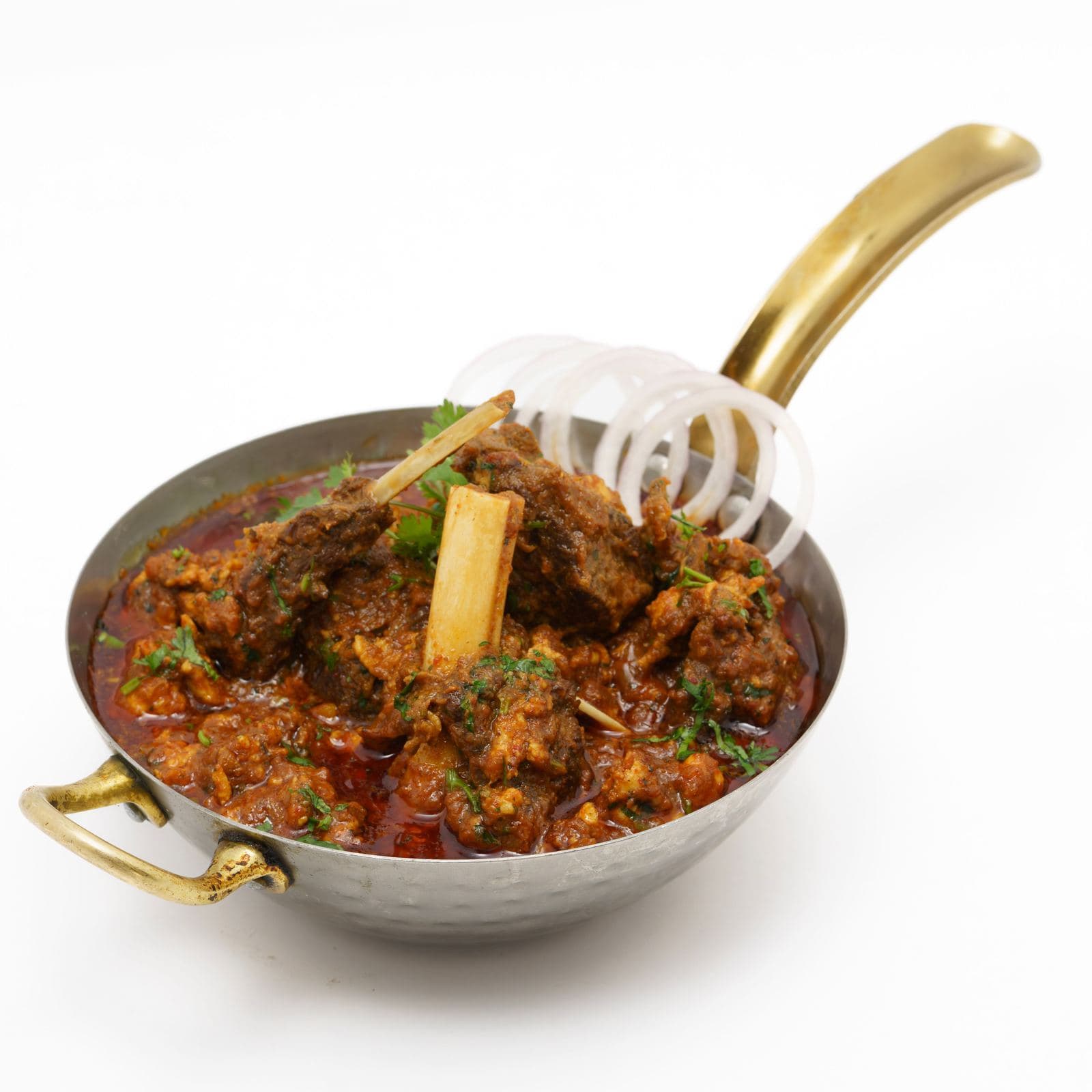
About this recipe
Fried mutton, wrapped in foil with aromatics and buried in hot coals until tender.
It falls under our Mutton & Goat collection and is tagged mutton, coal-cooked, foil-wrapped, outdoor cooking. Read the tips and substitutions below the recipe card before you start, and scan the ingredients first so nothing surprises you mid-cook.
Coal-Cooked Mutton
https://www.steakhousediaries.com/recipes/coal-cooked-mutton
- Prep
- 20 min
- Cook
- 1 hr
- Total
- 1 hr 20 min
- Servings
- 1 kg mutton, serves 4
- Difficulty
- Medium
Ingredients
- 1 kg mutton
- Oil, as needed for frying
- Whole garlic cloves
- Ginger pieces
- Tomatoes, cut into 2 pieces each
- Onions, cut into 2 pieces each
- Whole green chilies
- Salt, to taste
- Chutney, for serving
Equipment
- Heavy cooking pot
- Wood fire or charcoal
- Aluminum foil
- Tongs
Instructions
Step 1: Fry the mutton
Wash the mutton thoroughly and drain. Heat oil in a heavy cooking pot over a wood fire and fry the mutton well until nicely browned. Remove the fried mutton.
Step 2: Layer the aromatics
Place all the fried mutton on foil paper and add whole garlic cloves, ginger pieces, tomatoes cut into two pieces, onions cut into two pieces, whole green chilies and a little salt.
Step 3: Wrap
Wrap the mutton completely in the foil, sealing the edges well so no juices escape.
Step 4: Bury in coals
Place the foil packet in hot coals and cover it with more coals. Cook until the mutton is fully tender.
Step 5: Serve
Carefully open the foil and serve the cooked mutton on a rustic plate with chutney.
Step 6: Why frying first, then burying in coals, beats either step alone
This recipe looks simple — fry, wrap, bury — but each step covers a weakness of the others, and skipping one changes the result. Frying the mutton first in a heavy pot over a wood fire is not just about cooking it partway. Browning the outside builds flavour that slow cooking alone never creates: the browned surface tastes rich and savoury in a way pale, steamed meat does not. Frying in batches, as the tips suggest, is what makes that browning possible. Crowd the pot and the meat steams in its own juices instead of browning; give each piece room and it fries properly. Wrapping is the second half of the method. Once the mutton is browned, it goes onto foil with whole garlic cloves, ginger pieces, tomatoes and onions cut in two, whole green chilies and salt, and the foil is sealed so no juices escape. Inside that sealed packet, the mutton finishes cooking in its own steam and juices, while the whole aromatics soften and release their flavour slowly without burning. Whole pieces matter here: chopped garlic or onion would scorch against the hot foil, but whole cloves and halved vegetables steam gently and flavour the meat and its juices over the full cook. Two or three layers of foil, as the tips recommend, protect the packet from sharp coals that could puncture it and let those juices leak out into the fire. Burying the packet in hot coals is what makes the whole thing work without an oven. Coals surround the packet with steady, even heat from every side, which is exactly what tough mutton needs: time at a gentle, enclosed heat until the fibres relax and a fork slides in and pulls the meat apart easily. That is the doneness test the recipe gives, and it is a better guide than any clock, because coal heat varies with the fire. Open the foil carefully — the steam inside is hot — and serve with chutney, which cuts through the richness of the browned, slow-cooked meat.
Cooking tips
- Fry the mutton in batches so it browns rather than steams in the pot.
- Use two or three layers of foil to prevent the coals from puncturing the packet.
Storage and reheating
Storage: Refrigerate leftovers in an airtight container for up to 3 days.
Reheating: Reheat gently in a covered pan over low heat with a splash of water, or in a 325°F (163°C) oven until warmed through.
Ingredient substitutions
- Goat meat works in place of mutton with the same method and timing.
Nutrition information
Approximate values per serving, estimated from typical ingredient data. Results vary with brands and portions; this is not medical or dietary advice.
| Calories | 390 |
|---|---|
| Total fat | 24 g |
| Saturated fat | 8 g |
| Carbohydrates | 4 g |
| Fiber | 1 g |
| Sugar | 1 g |
| Protein | 38 g |
| Sodium | 540 mg |
Frequently asked questions
Can I make this without an open fire?
Yes. Fry the mutton as directed, then finish it wrapped in foil in a 325°F (163°C) oven for about an hour, or until fork-tender, in place of burying it in coals.
How do I know the mutton is done?
It's ready when a fork slides in and pulls the meat apart easily; mutton benefits from cooking past well-done into tender, fall-apart territory.
Why fry the mutton before burying it, instead of wrapping it raw?
Frying first builds the browned, savoury flavour that slow cooking alone cannot create. Raw mutton buried in coals would turn tender but taste flat; the fry gives it the rich crust and depth the finished dish depends on.
Why are the garlic, tomatoes and onions left whole or halved, not chopped?
Inside a sealed foil packet over coals, small chopped pieces would scorch against the hot foil. Whole cloves and halved vegetables steam gently instead, releasing their flavour slowly into the meat and its juices over the whole cook.
Related recipes
 Mutton & Goat
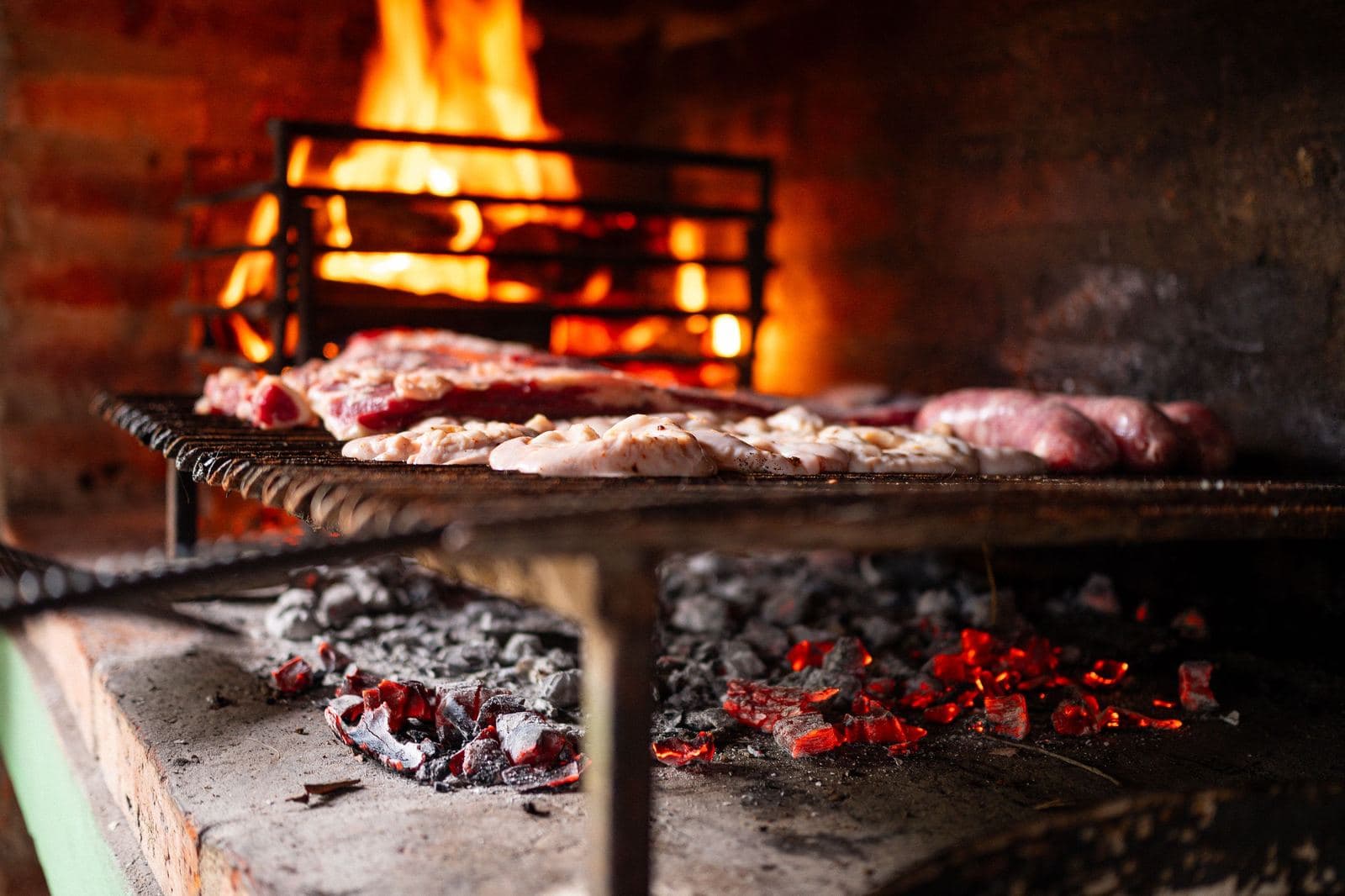
Buried Coal Mutton Leg
A whole mutton leg marinated with ginger-garlic, garam masala and butter, wrapped in foil with onions and tomatoes, and slow-cooked buried in a bed of hot charcoal.
- Prep
- 25 min
- Cook
- 2 hr 30 min
- Level
- Advanced
 Mutton & Goat
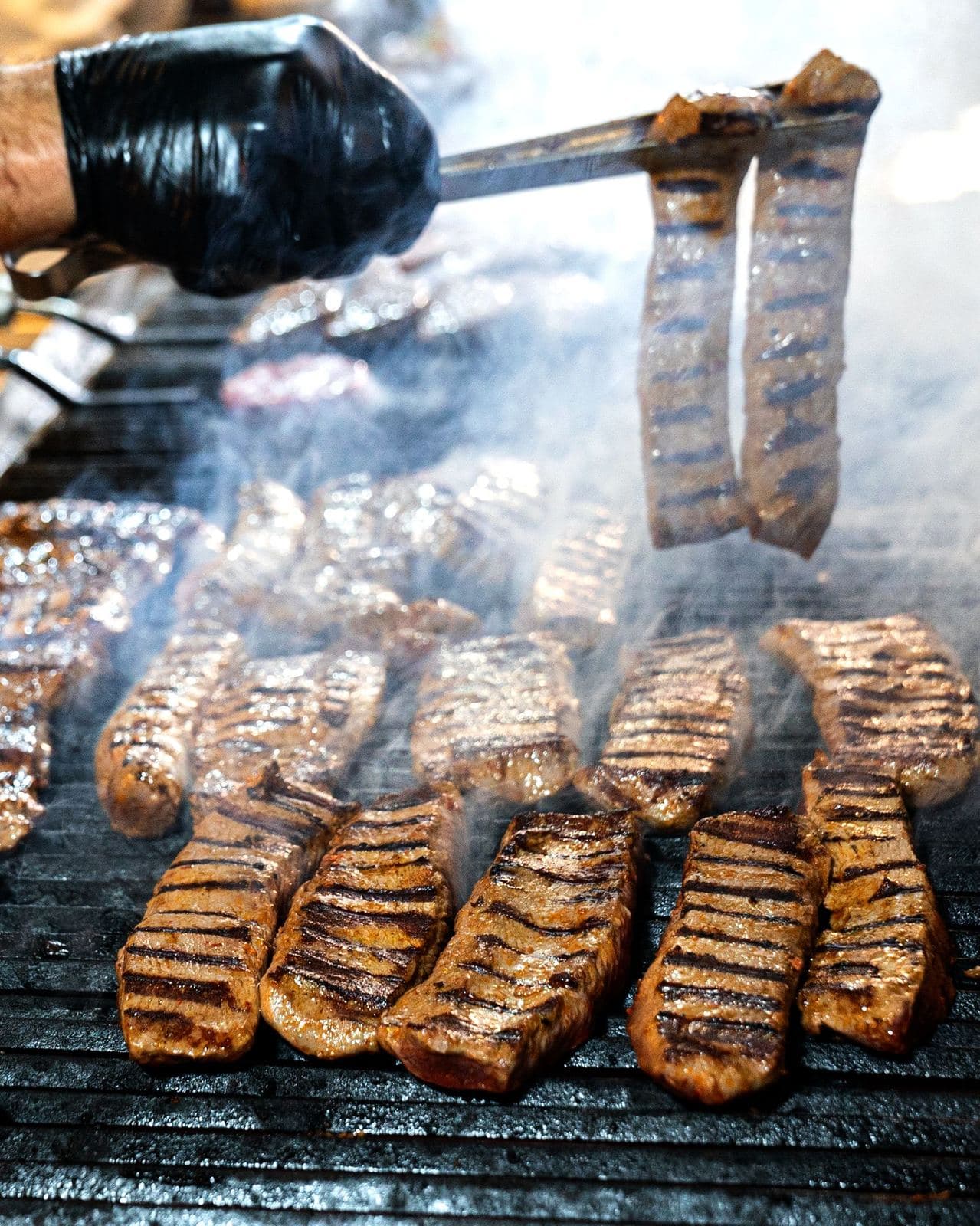
Jungle Fire-Grilled Mutton Steaks
Boneless mutton steaks marinated in ginger-garlic, crushed coriander and lemon juice, then grilled over steady wood coals until browned and tender.
- Prep
- 15 min
- Cook
- 20 min
- Level
- Medium
 Mutton & Goat
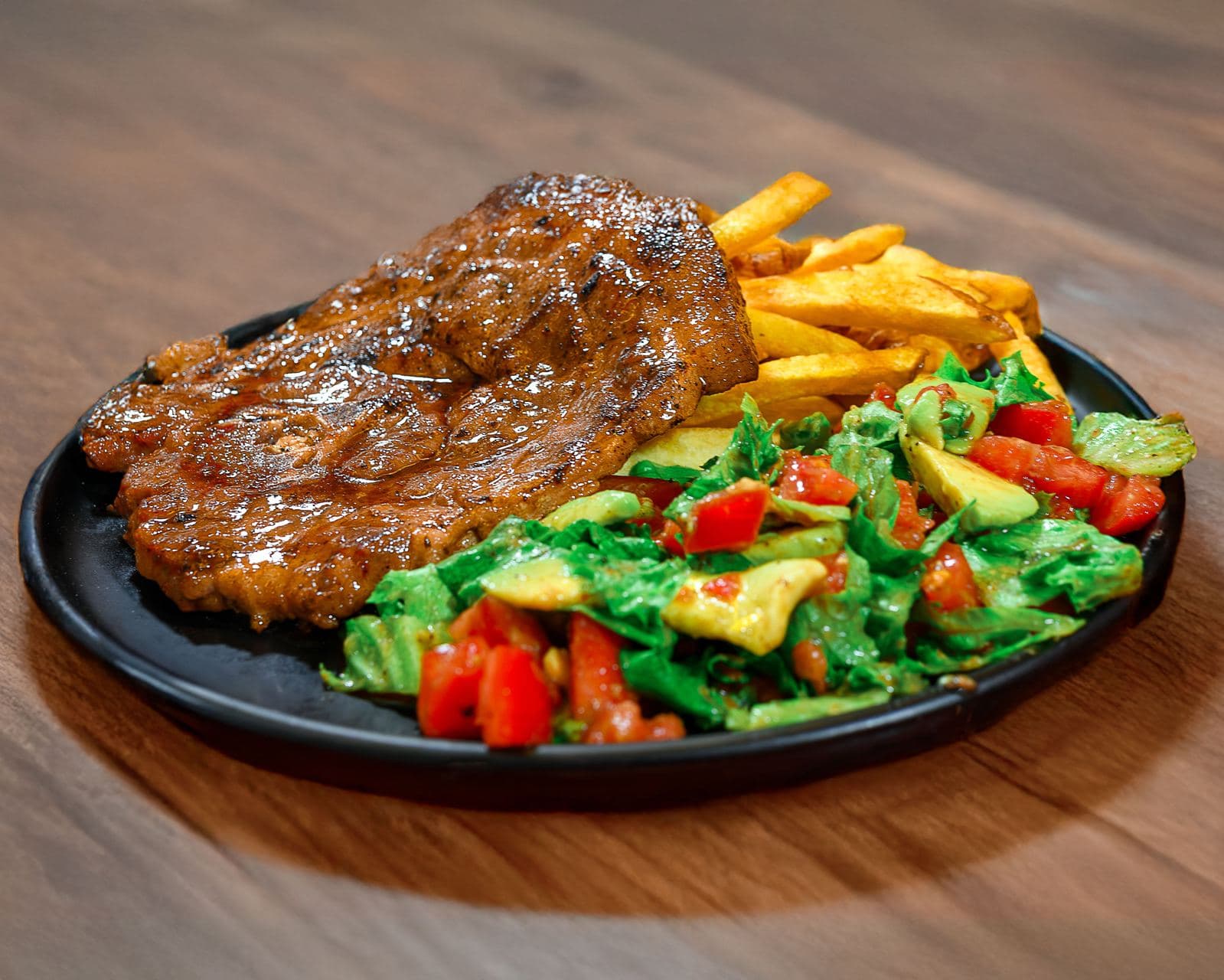
American-Style Mountain Goat Steak
A thick goat steak rubbed with garlic, paprika and herbs, then seared over a wood campfire on a hot flat stone until deeply browned and tender.
- Prep
- 15 min
- Cook
- 15 min
- Level
- Medium
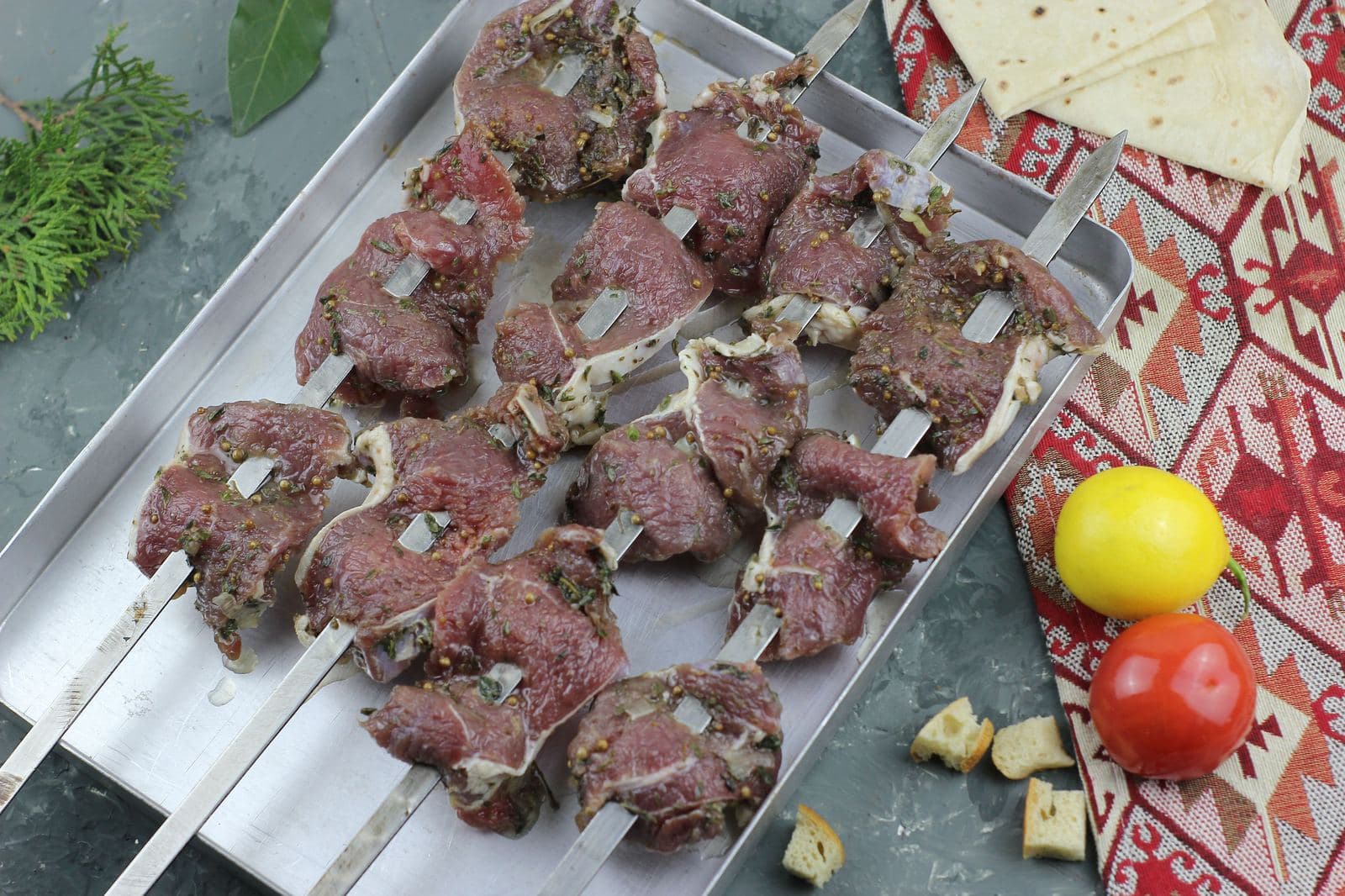 Mutton & Goat
Juicy Herb-Marinated Bone-In Mutton Steak
A single thick bone-in mutton steak marinated with cheese, fresh coriander, mint and lemon, then grilled slowly over charcoal until smoky, tender and pulled easily from the bone.
- Prep
- 15 min
- Cook
- 20 min
- Level
- Medium
Related articles
 Guides
Digital Kitchen Scale: Weighing Ingredients the Accurate Way
11 lb capacity, 1 g increments and a tare function — what to check before you buy.
· 3 min read
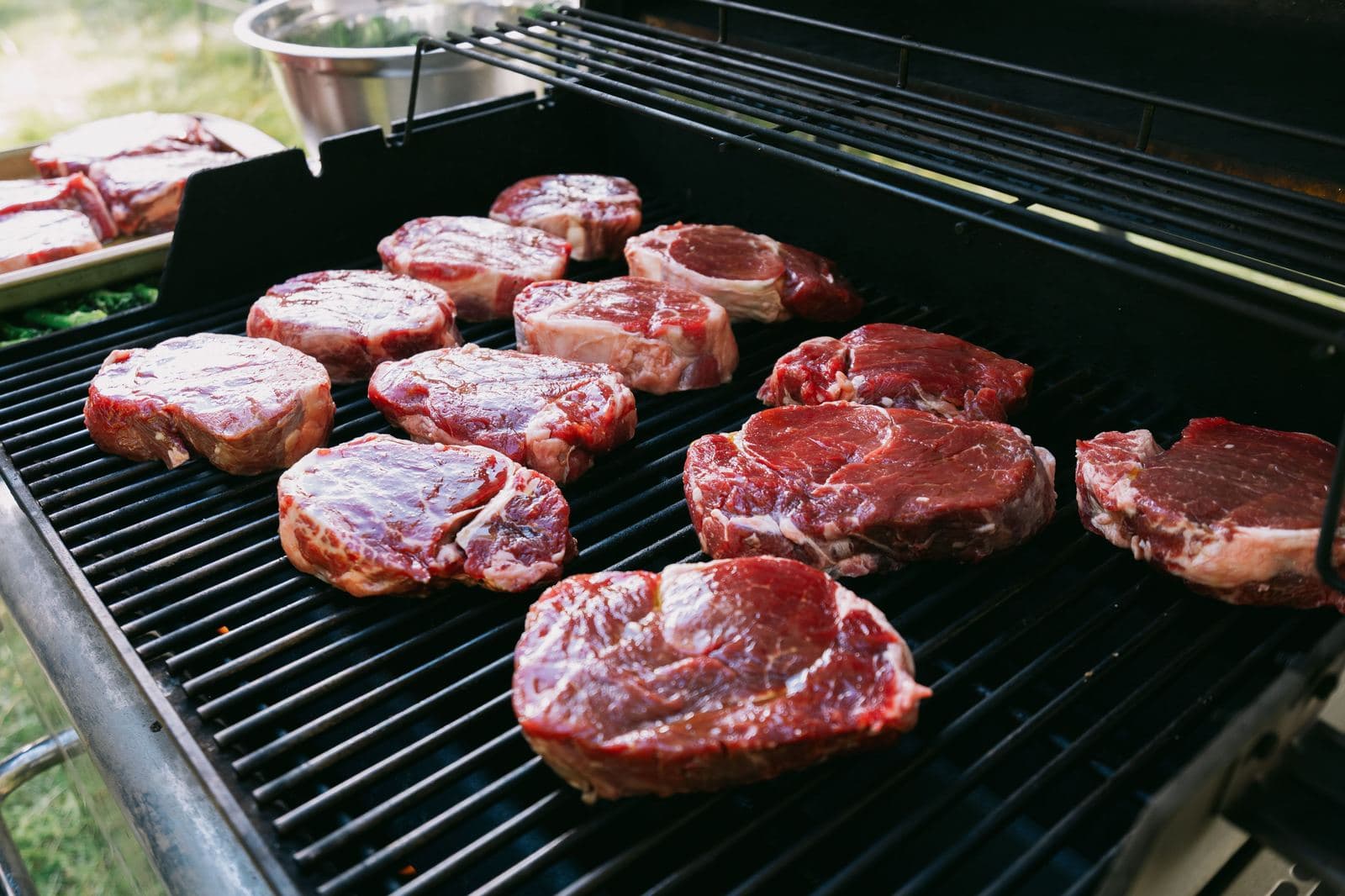 Guides
Charcoal Grill with Side Tables: What to Look For
343 sq. in. of cooking space, two side tables and a smoker mode — what to check before you buy.
· 3 min read
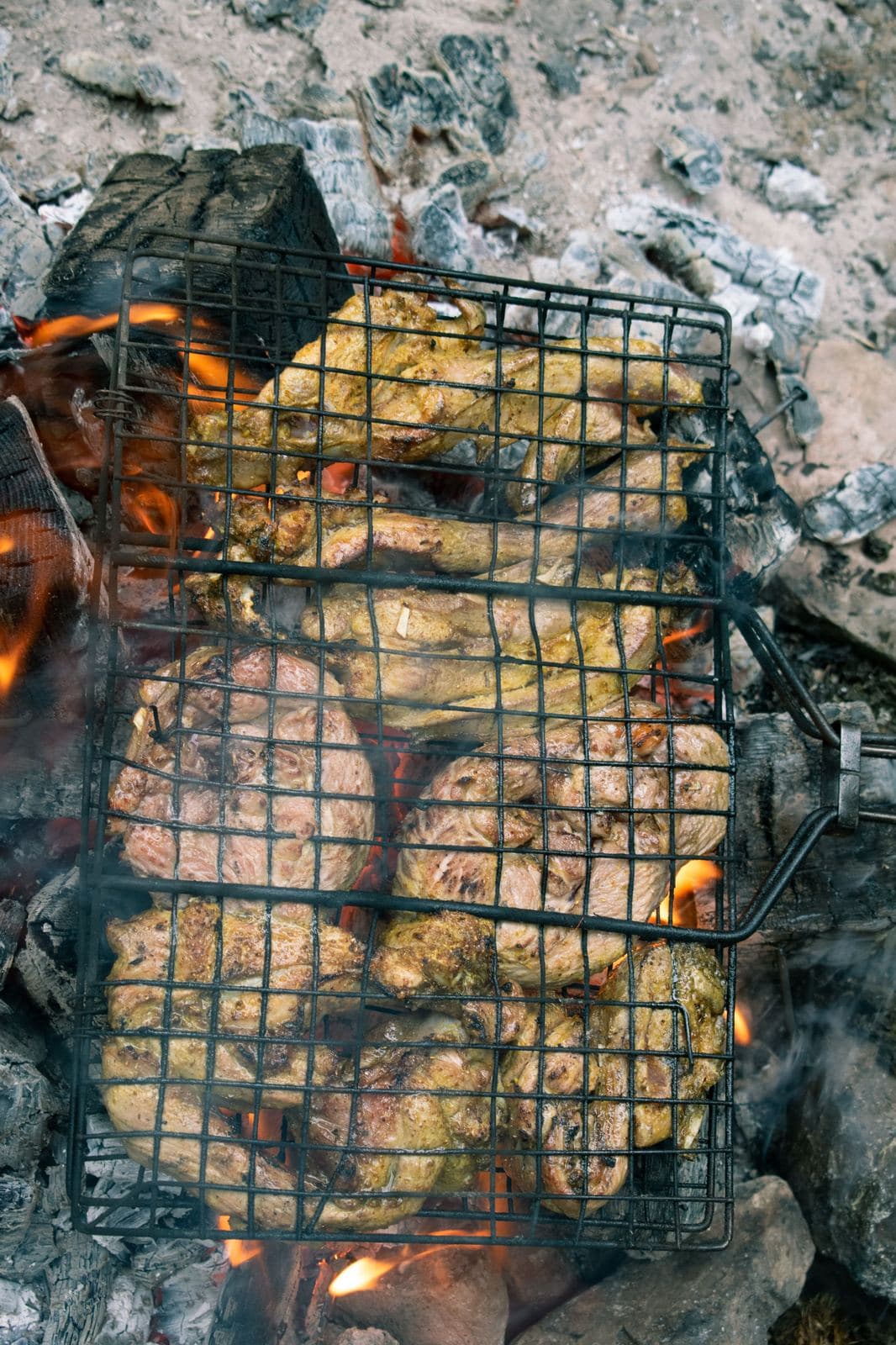 Cooking Tips
How to Cook Over an Open Fire
Building the right fire, timing your marinade and checking doneness without a kitchen.
· 5 min read