Jungle Fire-Grilled Whole Fish
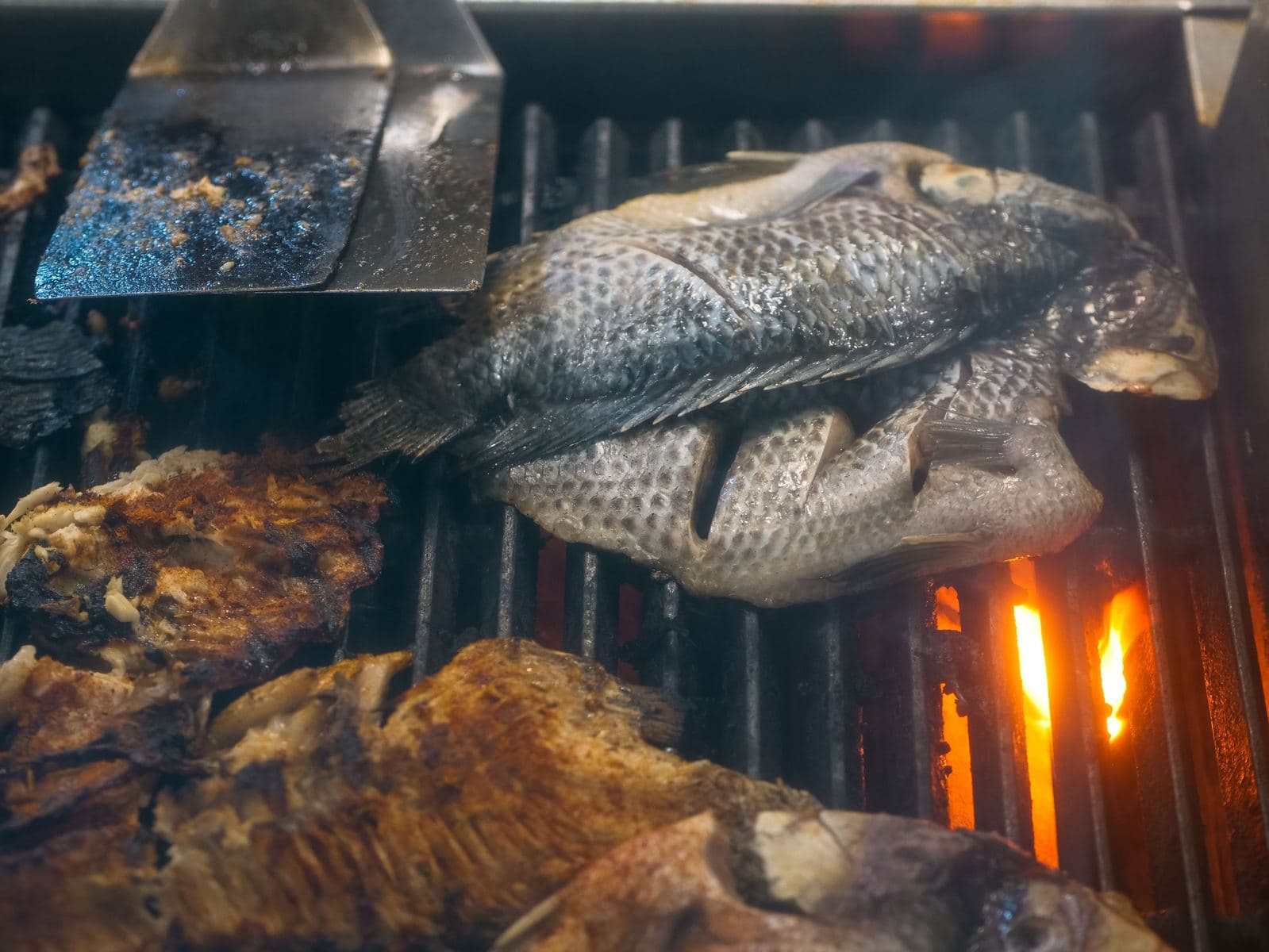
A whole cleaned fish, deeply scored and marinated with ginger-garlic, turmeric and lemon, then grilled over hot wood coals until the skin is smoky and golden and the flesh flakes easily.
By Steak House Diaries Kitchen Desk | Published | Updated
About this recipe
A whole fish, marinated and grilled over wood coals until smoky and golden.
It falls under our Seafood collection and is tagged fish, seafood, grilling, campfire. Read the tips and substitutions below the recipe card before you start, and scan the ingredients first so nothing surprises you mid-cook.
Jungle Fire-Grilled Whole Fish
https://www.steakhousediaries.com/recipes/jungle-fire-grilled-whole-fish
- Prep
- 20 min
- Cook
- 20 min
- Total
- 1 hr 25 min
- Servings
- 1 whole fish (800 g to 1 kg), serves 3
- Difficulty
- Medium
Ingredients
- 1 whole cleaned fish, about 800 g to 1 kg
- 1½ tablespoons ginger-garlic paste
- 1 teaspoon salt, or to taste
- 1 teaspoon red chili powder
- ½ teaspoon turmeric powder
- ½ teaspoon crushed black pepper
- 1 teaspoon crushed coriander
- 2 tablespoons lemon juice
- 2 tablespoons cooking oil
- 2 to 3 green chilies
- Fresh coriander
- Lemon wedges
Equipment
- Sturdy metal grill
- Wood fire or charcoal
- Fish spatula
- Tongs
Instructions
Step 1: Prepare the fish
Wash and clean the whole fish thoroughly. Pat it dry and make several deep cuts on both sides.
Step 2: Make the marinade
Mix ginger-garlic paste, salt, red chili, turmeric, black pepper, crushed coriander, lemon juice and oil.
Step 3: Marinate
Rub the marinade all over the fish, especially inside the cuts. Cover and rest for 30 to 60 minutes.
Step 4: Prepare the grill
Heat a sturdy metal grill over hot wood coals until the grill is properly hot.
Step 5: Grill the fish
Place the marinated fish on the grill. Cook over steady medium heat, turning carefully so both sides develop a golden, smoky crust.
Step 6: Finish and serve
Continue grilling until the fish is fully cooked and flakes easily, keeping flames moderate so the outside doesn't burn before the inside cooks. Transfer to a serving board and garnish with fresh coriander, green chilies and lemon wedges.
Step 7: Why a whole fish on the grill is a scoring and patience dish
Grilling a whole fish over wood coals looks simple, but it goes wrong in two specific ways — the skin sticks and tears, or the outside burns before the inside cooks — and every step of this recipe is aimed at one of those two problems. It starts with the deep cuts on both sides of the cleaned fish. Those cuts are not decoration. They let the ginger-garlic, turmeric, chili, coriander and lemon marinade reach the thick flesh near the bone, which is the part that otherwise stays bland and undercooked while the outside overcooks. They also let heat travel into the thickest part of the fish, so the whole fish cooks more evenly in the 20 minutes on the grill. Rubbing the marinade especially inside the cuts, as the recipe directs, is what makes that work; marinade sitting only on the skin flavours the skin, not the fish. The second half of the method is heat control. The recipe asks for a sturdy metal grill heated properly over hot wood coals, and for steady medium heat with moderate flames while grilling. That restraint is the whole secret. A fierce, flaming fire chars the skin black before the flesh near the bone is cooked, and it makes the fish stick harder to the grate. Steady medium heat lets the skin turn golden and smoky and crisp gradually while the flesh cooks through to opaque and flaky. Oiling the grates well, as the tips suggest, is what keeps the skin attached to the fish instead of the grill, and waiting for the crust to set before the first flip is what keeps the fish in one piece — if it resists when you try to turn it, the crust has not set yet, and forcing it will tear the skin. Use a wide, thin spatula for that first flip, support the fish, and turn it carefully so both sides develop the same golden crust. Judge doneness by the flesh, not the clock: it should be opaque all the way through, flake easily with a fork, and reach 145°F (63°C) inside. Serve it on a board with fresh coriander, green chilies and lemon wedges while the skin is still crisp.
Cooking tips
- Oil the grill grates well; whole fish sticks easily and a well-oiled grate makes turning much cleaner.
- Use a wide, thin spatula for the first flip, and don't force it, the fish will release when the crust has fully set.
Storage and reheating
Storage: Refrigerate leftover fish in an airtight container for up to 2 days.
Reheating: Reheat gently, covered, in a 300°F (150°C) oven for 8 to 10 minutes to avoid drying it out.
Ingredient substitutions
- Any firm whole white fish, such as tilapia or sea bass, works with this marinade.
Nutrition information
Approximate values per serving, estimated from typical ingredient data. Results vary with brands and portions; this is not medical or dietary advice.
| Calories | 310 |
|---|---|
| Total fat | 14 g |
| Saturated fat | 3 g |
| Carbohydrates | 4 g |
| Fiber | 1 g |
| Sugar | 1 g |
| Protein | 38 g |
| Sodium | 520 mg |
Frequently asked questions
How do I know the fish is fully cooked?
The flesh should be opaque all the way through and flake easily when tested with a fork; it should reach an internal temperature of 145°F (63°C).
How do I stop the fish from falling apart on the grill?
Keep the marinade light on oil at the surface right before grilling, oil the grates instead, and use two spatulas to support the fish when you turn it.
Why do the cuts on the fish need to be deep, not shallow?
Deep cuts let the marinade reach the thick flesh near the bone and let heat travel into the centre of the fish. Shallow cuts only score the skin, so the thickest part stays bland and undercooked while the outside overcooks.
Why moderate flames instead of a fierce fire?
A fierce fire chars the skin black before the flesh near the bone is cooked, and it makes the fish stick harder to the grate. Steady medium heat crisps the skin gradually while the flesh cooks through to opaque and flaky.
Related recipes
 Mutton & Goat
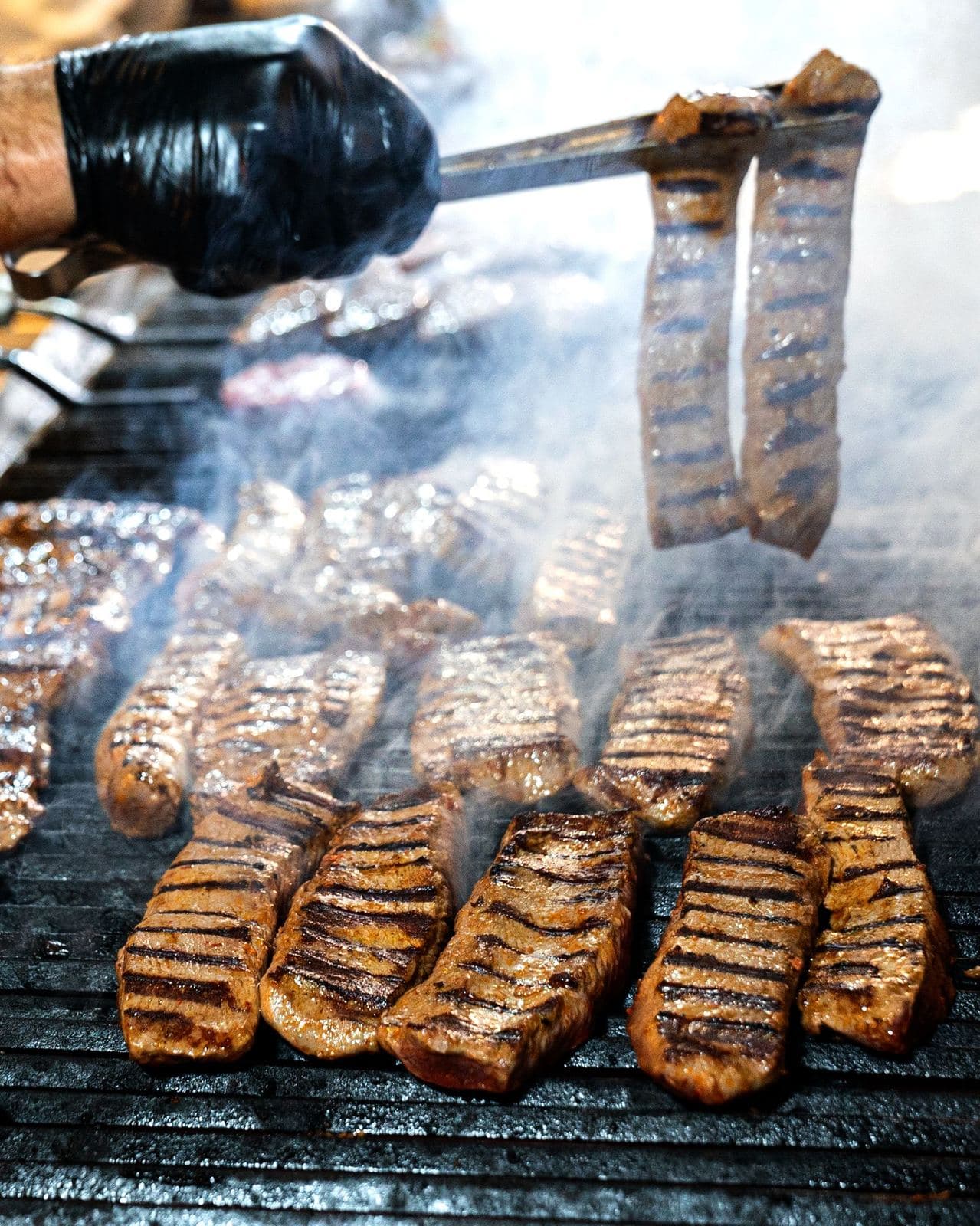
Jungle Fire-Grilled Mutton Steaks
Boneless mutton steaks marinated in ginger-garlic, crushed coriander and lemon juice, then grilled over steady wood coals until browned and tender.
- Prep
- 15 min
- Cook
- 20 min
- Level
- Medium
 Mutton & Goat
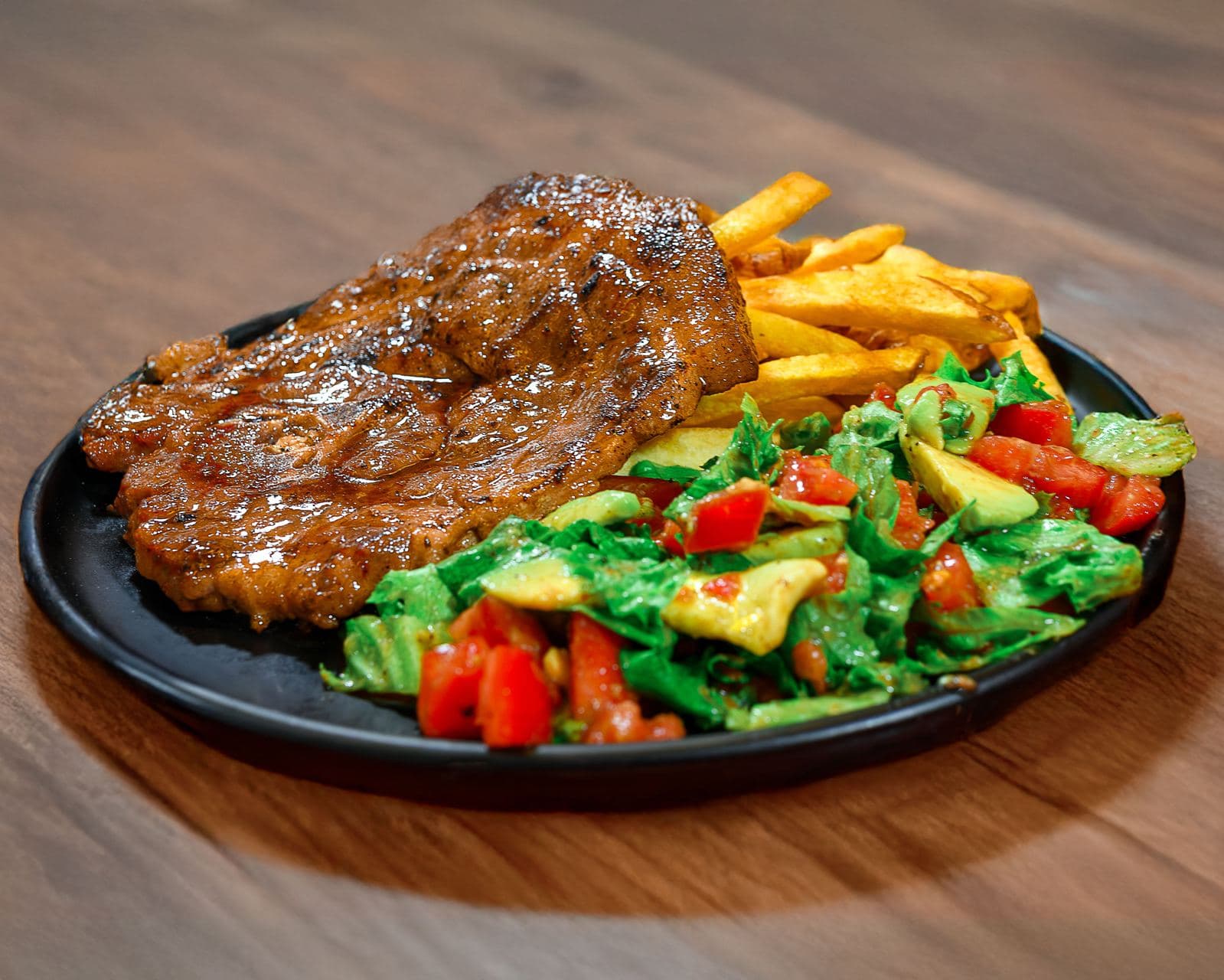
American-Style Mountain Goat Steak
A thick goat steak rubbed with garlic, paprika and herbs, then seared over a wood campfire on a hot flat stone until deeply browned and tender.
- Prep
- 15 min
- Cook
- 15 min
- Level
- Medium
 Seafood
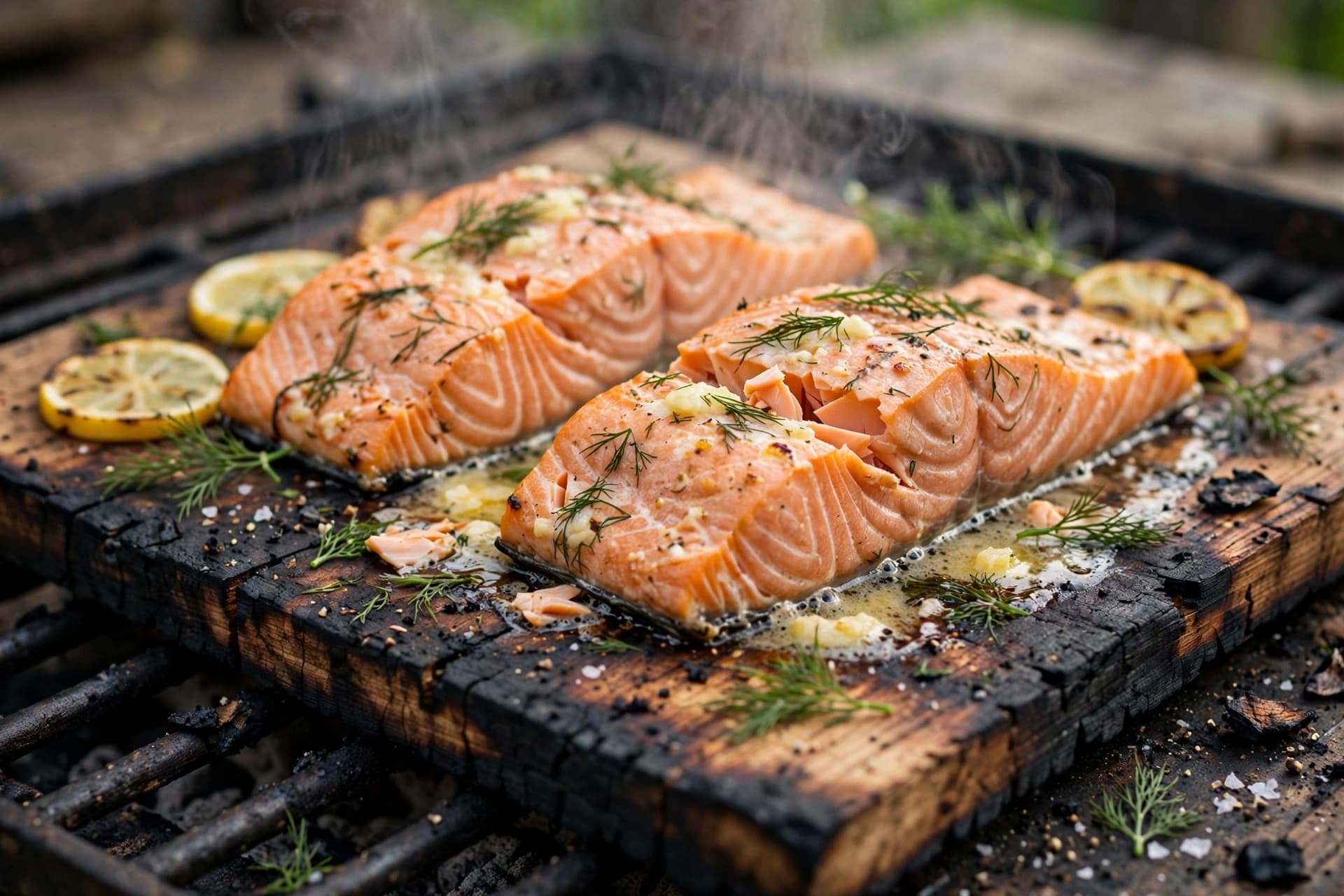
Cedar-Plank Grilled Salmon with Lemon Butter
Salmon fillets grilled on a soaked cedar plank over charcoal, brushed with lemon butter until just flaky and smoky.
- Prep
- 20 min
- Cook
- 15 min
- Level
- Medium
 Seafood
Garlic Butter Shrimp Skewers over Real Fire
Shrimp skewers over real fire with garlic butter: a fast hard sizzle, curled edges, and one butter timing that keeps them juicy, never rubbery.
- Prep
- 15 min
- Cook
- 5 min
- Level
- Easy