Garlic Butter Shrimp Skewers over Real Fire
Shrimp skewers over real fire with garlic butter: a fast hard sizzle, curled edges, and one butter timing that keeps them juicy, never rubbery.
By Steak House Diaries Kitchen Desk | Published | Updated
About this recipe
Shrimp skewers are a timing dish: a fast hard sizzle over real fire, one flip, and garlic butter brushed on only at the end so they stay juicy, never rubbery.
It falls under our Seafood collection and is tagged shrimp, seafood, grilling, campfire. Read the tips and substitutions below the recipe card before you start, and scan the ingredients first so nothing surprises you mid-cook.
Garlic Butter Shrimp Skewers over Real Fire
https://www.steakhousediaries.com/recipes/garlic-butter-shrimp-skewers
- Prep
- 15 min
- Cook
- 5 min
- Total
- 40 min
- Servings
- 500 g large shrimp, serves 4
- Difficulty
- Easy
Ingredients
For the shrimp
- 500 g large shrimp, peeled and deveined, tails on
- metal skewers, or wooden skewers soaked 30 minutes
For the garlic butter marinade
- 3 tbsp melted butter
- 3 garlic cloves, finely grated
- 1 tbsp olive oil
- 1 tsp smoked paprika
- 1/2 tsp coarse salt
- 1/2 tsp cracked black pepper
- Pinch of chili flakes (optional)
- Juice of 1/2 lemon, plus wedges to serve
- 1 tbsp chopped parsley, to finish
Equipment
- Skewers
- Grill grate over a coal fire
- Tongs
- Pastry brush
- Mixing bowl
Instructions
Step 1: Make the marinade
Whisk the olive oil, garlic, smoked paprika, salt, pepper and chili flakes (if using). Coat the shrimp in the marinade and rest for 20 minutes.
Step 2: Thread the skewers
Thread 4 to 5 shrimp per skewer, snug but not squeezed.
Step 3: Prepare the fire
Heat a hot, settled coal fire and oil the grate lightly.
Step 4: Sear
Sear the skewers for 2 to 3 minutes on the first side until the edges curl and char, then flip once only.
Step 5: Brush with butter
Brush the melted butter on only after the flip, in the last 60 to 90 seconds; butter at the start burns the garlic. Finish with lemon juice and parsley off the heat.
Step 6: Serve
Serve straight off the skewers with lemon wedges.
Step 7: Why shrimp are a timing dish, and butter is a finishing move
Shrimp cook faster than almost anything else on this site, and that speed is both the appeal and the trap of this recipe. The whole cook takes 4 to 6 minutes, and the difference between juicy and rubbery is about a minute on either side. That is why the method is built around timing cues you can see, not times you have to guess: the shrimp are done when they curl loosely and turn opaque, with charred edges, and they are overdone when they curl into tight little balls and turn tough. A loose curl means the proteins have set; a tight curl means they have squeezed all their moisture out. Once you know that, you can judge every skewer by eye, even over an uneven fire. The marinade and the skewering both serve that fast cook. The shrimp rest in the oil, garlic, smoked paprika, salt, pepper and chili flake mixture for only 20 minutes — long enough to season them, short enough that the lemon in the mix does not start to firm up the flesh. Threading 4 to 5 shrimp per skewer, snug but not squeezed, matters more than it looks: snug shrimp hold together and char at the edges, while squeezed shrimp steam against each other and cook unevenly, and loose shrimp spin when you try to flip them. Over a hot, settled coal fire with an oiled grate, the skewers sear for 2 to 3 minutes on the first side until the edges curl and char, and then they are flipped once only. One flip is a rule, not a suggestion: every extra flip costs heat, breaks the crust, and adds handling time to a cook measured in minutes. The butter is the last move, and its timing is the recipe's signature detail. Melted butter brushed on only after the flip, in the last 60 to 90 seconds, gives the garlic flavour without burning — butter and garlic scorch quickly over real fire, and butter added at the start would blacken before the shrimp were cooked. Off the heat, lemon juice and parsley finish the dish while the shrimp are still hot enough to carry the flavour. Serve them off the skewers with lemon wedges, because shrimp wait for no one: a minute sitting on a plate is a minute of carryover cooking, and these are best eaten the moment they come off the fire.
Cooking tips
- Shrimp are done when they curl loosely and turn opaque; overcooked shrimp turn tight and rubbery.
- Brush the garlic butter on late, in the last 60 to 90 seconds, so the garlic does not burn over the coals.
- Keep the shrimp snug but not squeezed on the skewer so the edges can char instead of steam.
Storage and reheating
Storage: Refrigerate leftovers in an airtight container for up to 2 days.
Reheating: Reheat gently in a hot pan for 1 to 2 minutes until warmed through; avoid overheating, which makes shrimp rubbery.
Ingredient substitutions
- Large prawns work with the same marinade and timing; add a minute per side for very large prawns.
Nutrition information
Approximate values per serving, estimated from typical ingredient data. Results vary with brands and portions; this is not medical or dietary advice.
| Calories | 240 |
|---|---|
| Total fat | 12 g |
| Saturated fat | 6 g |
| Carbohydrates | 2 g |
| Fiber | 0 g |
| Sugar | 0 g |
| Protein | 28 g |
| Sodium | 580 mg |
Frequently asked questions
When are the shrimp done?
After 4 to 6 minutes total, when they are opaque, curled at the edges and lightly charred; flip them only once.
Why add the butter after flipping?
Butter and garlic burn quickly over real fire. Brushing it on in the last 60 to 90 seconds gives the flavour without burning the garlic.
Can I use wooden skewers?
Yes. Soak wooden skewers for 30 minutes first so they do not catch over the coals.
Why only 20 minutes in the marinade?
Twenty minutes is enough to season shrimp all the way through, and the lemon in the mixture can start to firm up the delicate flesh if left much longer. Unlike a thick steak, shrimp do not benefit from an overnight soak — they would turn mushy on the outside before they ever reached the fire.
Why thread the shrimp snug but not squeezed?
Snug shrimp hold together on the skewer and char at the edges, while squeezed shrimp press against each other, steam instead of searing, and cook unevenly. A little breathing room between them lets the fire reach every edge.
Related recipes
 Seafood
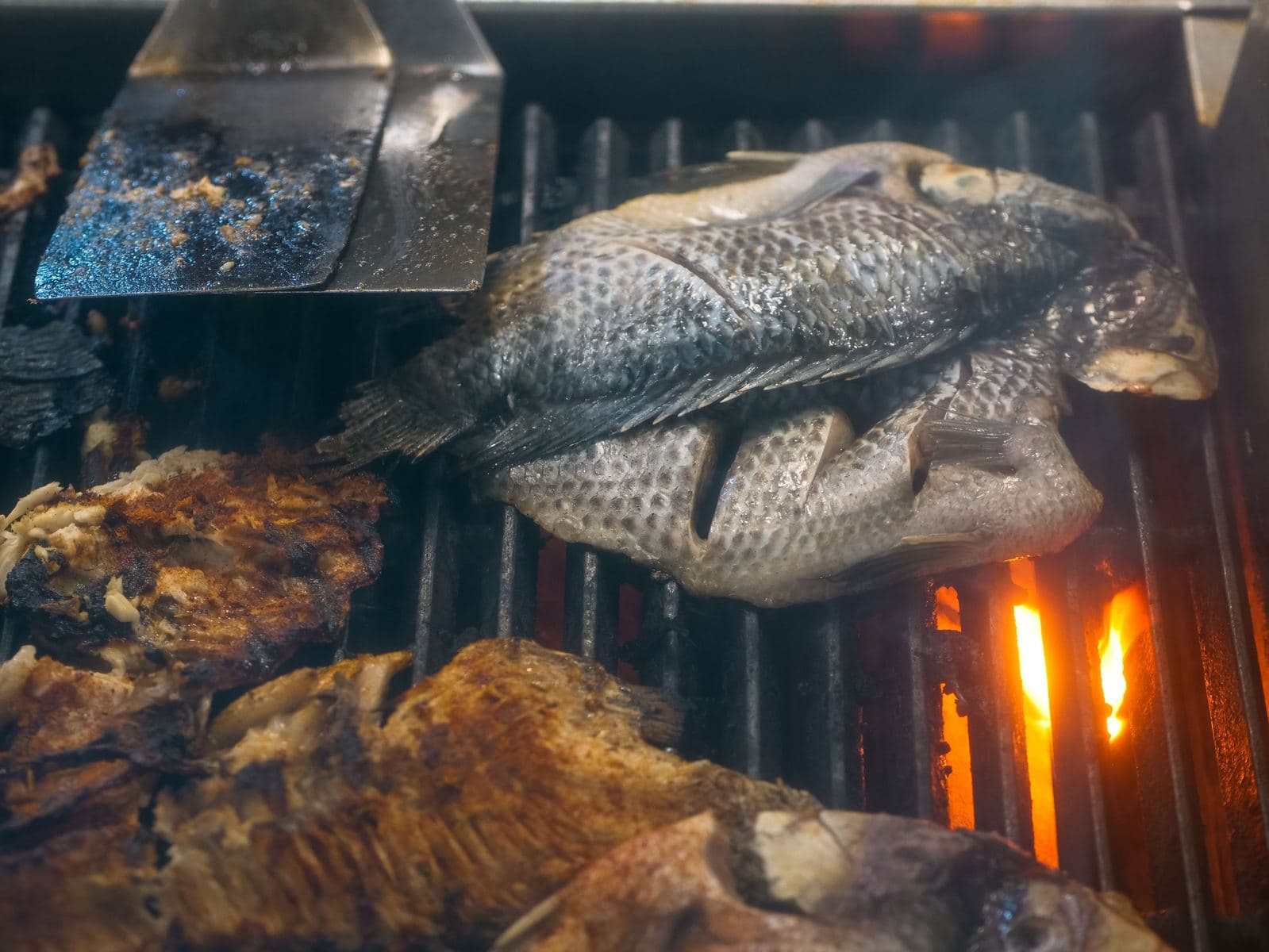
Jungle Fire-Grilled Whole Fish
A whole cleaned fish, deeply scored and marinated with ginger-garlic, turmeric and lemon, then grilled over hot wood coals until the skin is smoky and golden and the flesh flakes easily.
- Prep
- 20 min
- Cook
- 20 min
- Level
- Medium
 Mutton & Goat
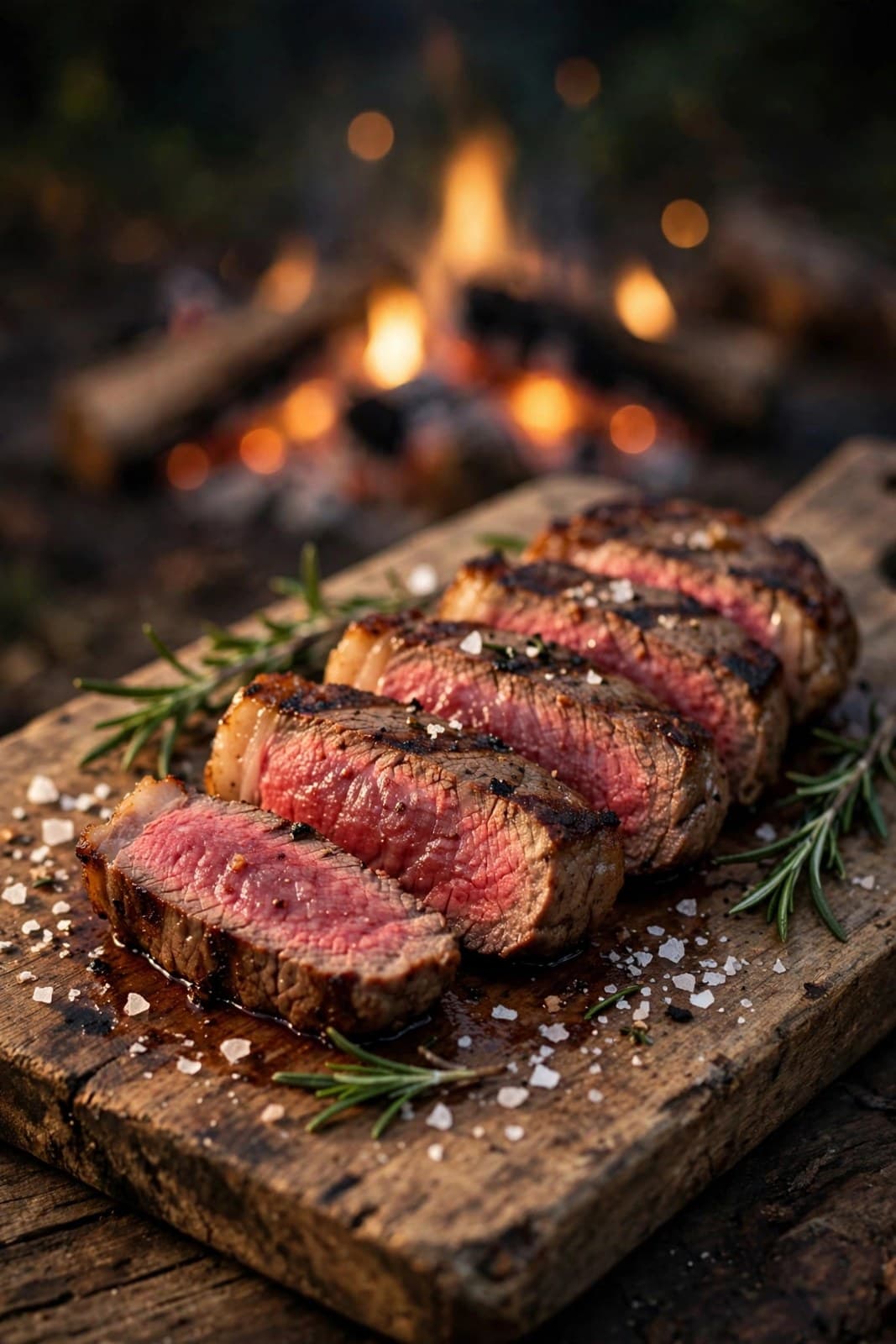
Campfire Steaks with a Butter-Baste Finish
Thick-cut steaks seared over open campfire coals, butter-basted and rested right — smoky crust, juicy medium-rare centre, every time.
- Prep
- 10 min
- Cook
- 10 min
- Level
- Medium
 Mutton & Goat
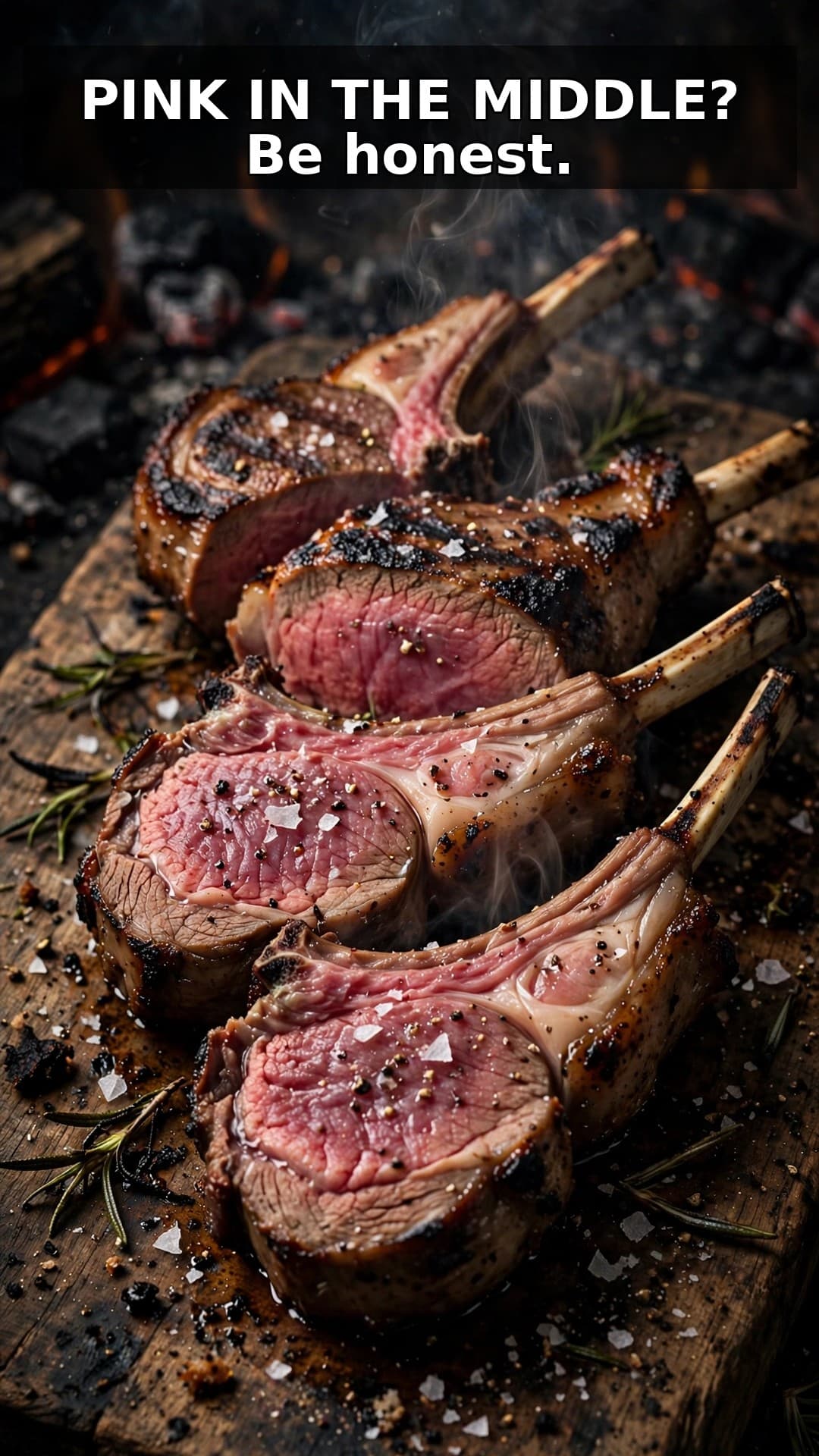
Grilled Lamb Chops with a Herb-Garlic Marinade
Lamb chops over open flame with a herb-garlic marinade: hard char outside, juicy pink centre, and tenderness decided hours before they hit the grill.
- Prep
- 15 min
- Cook
- 8 min
- Level
- Easy
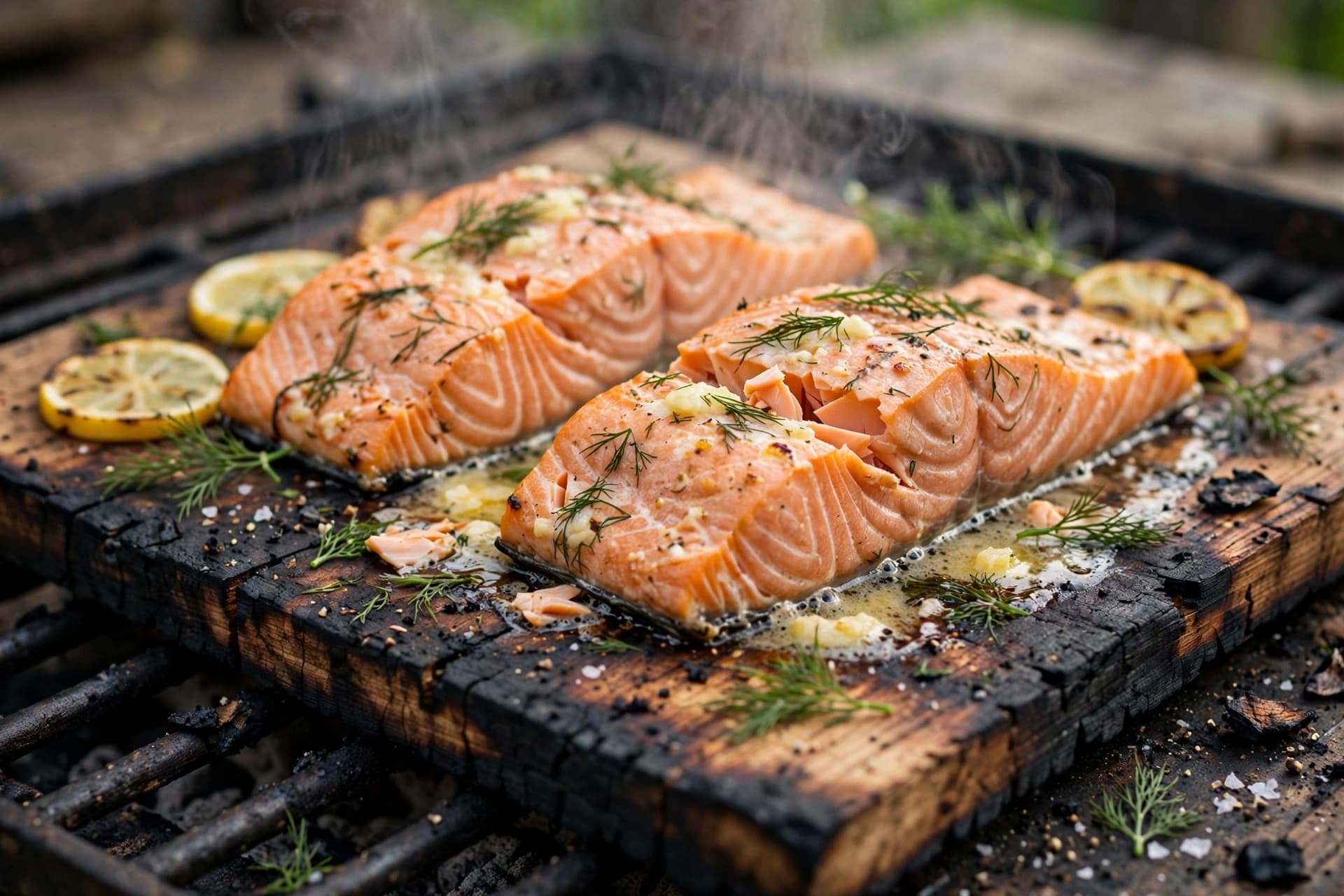 Seafood
Cedar-Plank Grilled Salmon with Lemon Butter
Salmon fillets grilled on a soaked cedar plank over charcoal, brushed with lemon butter until just flaky and smoky.
- Prep
- 20 min
- Cook
- 15 min
- Level
- Medium