Cooking Tips
Herb-Crusted Tomahawk Steak with a Spiced Butter Drizzle
A thick, bone-in tomahawk steak rubbed heavily with fresh rosemary and garlic, seared hard, and finished with a drizzle of spiced butter running over the crust.
By Steak House Diaries Kitchen Desk | Published | Updated | 4 min read
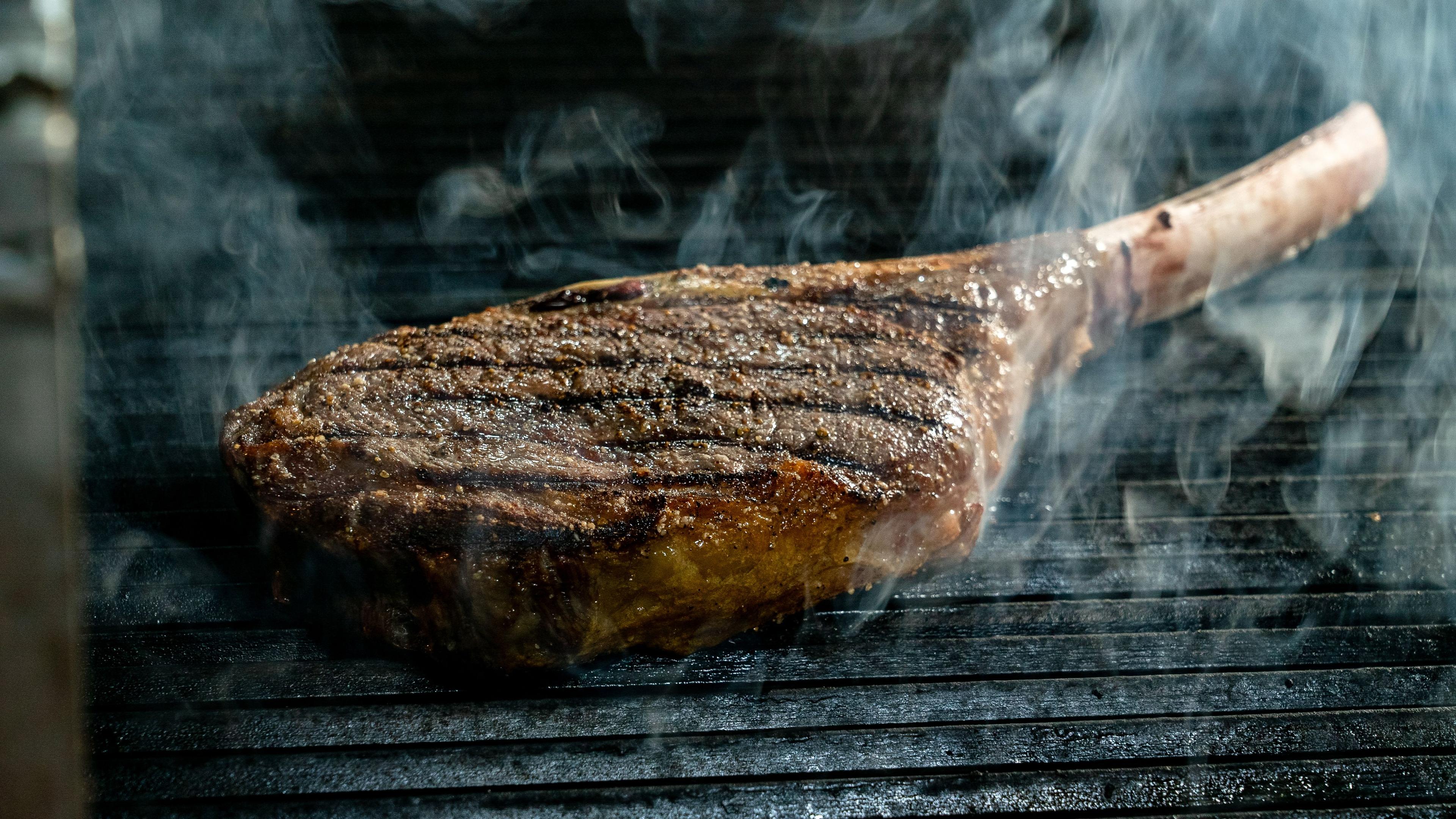
A tomahawk steak, cut with its long rib bone left in, is as much a centerpiece as it is a cut of beef. A heavy, fresh herb crust and a hard sear give it a deeply savory exterior, while a warm spiced butter poured over the top at the end adds richness and a glossy finish that pools around the bone.
Ingredients
One large tomahawk steak, serves 2.
- 1 bone-in tomahawk steak (about 2 to 2½ lb / 1 to 1.1 kg)
- 3 tbsp fresh rosemary, finely chopped
- 4 cloves garlic, crushed
- 3 tbsp olive oil
- Salt and cracked black pepper, to taste
- For the spiced butter: 4 tbsp butter, ½ tsp chili flakes or paprika, 1 tbsp pan drippings
Method
A thick, bone-in cut like this rewards a slow, deliberate approach.
- Pat the steak completely dry. Press the chopped rosemary, crushed garlic, salt, pepper and olive oil firmly into both sides.
- Let the seasoned steak sit at room temperature for 30 to 45 minutes so it cooks evenly rather than from a cold center.
- Sear hard on both sides over very hot coals or a very hot pan to build a deep crust, then move to lower or indirect heat to finish to your desired doneness.
- Check doneness with an instant-read thermometer inserted horizontally into the thickest part, away from the bone.
- Rest the steak for 8 to 10 minutes. Melt the butter with the chili flakes or paprika and a spoon of pan drippings until glossy.
- Pour the warm spiced butter over the top of the steak just before slicing and serving.
Sear, then finish: managing a thick bone-in cut
A tomahawk is two steaks in one: a thick eye of meat and a long bone that changes how heat moves through it. The bone shields the meat closest to it, so that part cooks slightly slower and stays a touch rarer than the rest. That is normal, not a mistake, and it is one reason a thermometer matters more here than on a thin steak. Sear hard over very hot coals or a very hot pan first, turning the steak to brown every edge, including the narrow sides and the fat cap. A thick cut has a lot of edge surface, and unseared edges taste soft and fatty next to a good crust. Then move the steak to lower or indirect heat to finish, exactly as this guide describes. On a grill, that means sliding it to the cooler side of the fire; indoors, it means a moderate oven after the pan sear. Check the temperature by inserting the thermometer horizontally into the thickest part, away from the bone, because the bone itself reads hotter than the meat around it and will mislead you. Remember that the temperature keeps climbing a few degrees during the rest, so judge your finish with the rest in mind, while keeping the food-safety line from this guide: whole cuts of beef are safe at a minimum of 145°F (63°C) followed by a 3-minute rest. If the steak finishes faster than expected, it can rest longer under a loose tent of foil without harm. What it cannot do is go back on fierce heat after resting, so take it off with confidence rather than second-guessing.
Slicing a tomahawk for the table
A tomahawk deserves a small ceremony at the table, and slicing is part of it. After the eight-to-ten-minute rest, keep the steak on the board and do not wrap it tightly in foil, which softens the crust you built. First, cut the meat away from the bone in one smooth piece, running the knife close along the bone. Set the bone aside on the serving platter; it looks the part and someone always wants it. Then slice the meat across the grain into even pieces, not too thin and not too thick, roughly the width of a finger. Cutting across the grain keeps each slice tender, and even slices mean everyone gets a fair share of crust and rosy center. Pour the warm spiced butter over the sliced meat rather than the whole steak if you want the butter to reach every piece, and spoon over any juices from the board as well. The butter, chili flakes and pan drippings from this guide carry the flavor of the sear, so they belong on the meat, not left on the board. Serve on a warmed platter, fanned out with the bone alongside, and let people take what they like. A tomahawk this size comfortably serves two hungry people or three lighter eaters, and it pairs best with simple sides that do not compete with it: roasted potatoes, a green salad, or grilled vegetables with lemon.
Frequently asked questions
What internal temperature should a tomahawk steak reach?
For food safety, whole cuts of beef are safe at a minimum internal temperature of 145°F (63°C) followed by a 3-minute rest, per USDA guidance; many cooks pull it slightly below that and let carryover heat and resting finish the job for a rosier center.
Why rest a steak this size for so long?
A thick, bone-in cut holds a lot of residual heat. A longer rest lets the juices redistribute evenly through the meat instead of running out onto the board when it's sliced.
Can I cook a tomahawk in the oven?
Yes. Roast it low in the oven until it is near your target doneness, then finish with a hard sear in a ripping-hot pan. The same safety rule applies: a minimum of 145°F (63°C) followed by a 3-minute rest.
Should I trim the long bone?
Leave it. The bone protects the meat beside it during cooking and makes the presentation. If your butcher offers to french the bone, cleaning off the meat and fat, that is a cosmetic choice and does not change the cooking.
Related recipes
Related articles
 Cooking Tips
How to Marinate and Grill the Perfect Steak
Scoring, marinating and grilling goat and mutton steaks so they turn out tender.
· 4 min read
 Cooking Tips
How to Cook Over an Open Fire
Building the right fire, timing your marinade and checking doneness without a kitchen.
· 5 min read