Cooking Tips
Resting, Slicing, and Serving Fire-Cooked Meat
Learn how long to rest each cut, how to rest it without losing its crust, and how to slice against the grain.
By Steak House Diaries Editorial Desk | Published | Updated | 4 min read
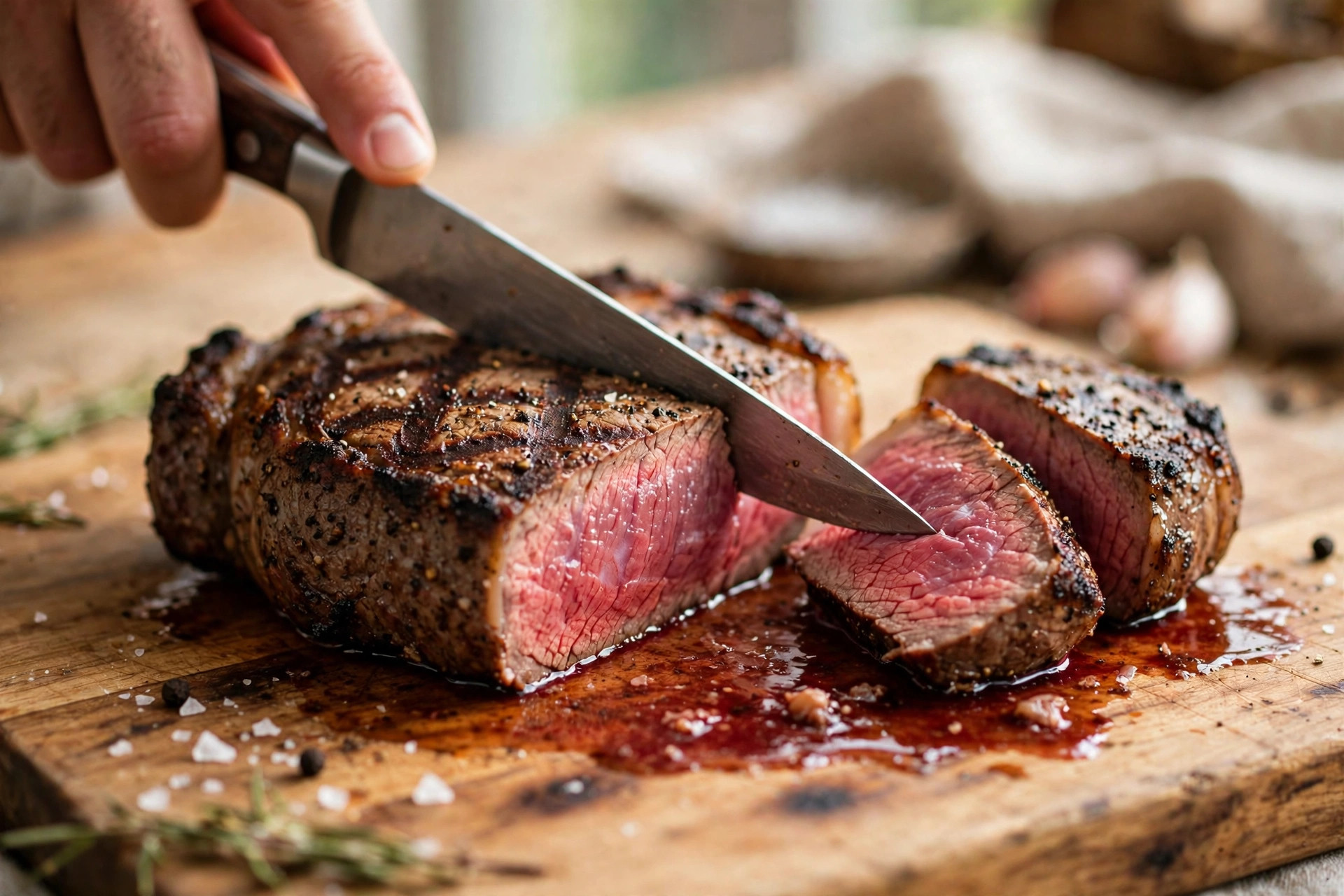
The hardest part of fire cooking is not the fire. It is the ten minutes after the meat comes off it. Cooks who pull a beautiful steak off the grill and cut straight into it lose the very juices that make it taste good, and cooks who slice with the grain turn tender meat chewy. Resting and slicing are small skills, but they decide whether a well-cooked piece of meat eats well or disappoints. This guide covers how long to rest each cut, how to rest it properly, and how to slice so every bite is tender.
Why resting matters
When meat cooks over fire, the heat drives moisture toward the centre and tightens the muscle fibers. If you cut immediately, those juices run out onto the board and the meat dries out in front of you. Resting lets the temperature even out across the cut and lets the fibers relax, so the juices redistribute through the meat instead of escaping. The difference is visible: a rested steak loses a spoonful of juice when sliced, while an unrested one floods the board. Resting also finishes the cook gently, since the centre keeps warming slightly after the meat leaves the heat. That carryover cooking is why experienced cooks pull meat off the fire just before it reaches its target temperature rather than exactly at it.
How long to rest each cut
Rest time depends on the size of the cut, not on a single rule, but a simple guide works for most fire cooking. Thin steaks and chops need about 3 to 5 minutes, which is enough for the juices to settle without the meat going cold. Thick steaks, whole chickens, and legs need 10 to 15 minutes, since their centres take longer to even out. Large slow-cooked joints, like a shoulder or a whole leg buried in coals, benefit from 20 to 30 minutes wrapped in foil, which also keeps them warm. A useful rule of thumb is to rest for about half the cooking time on thick cuts, and a few minutes on thin ones. The meat will still be warm and it will taste noticeably juicier, which is the whole point of waiting.
Resting the right way
How you rest matters as much as how long. Move the meat to a warm board or platter, not a cold one, and leave it uncovered or loosely tented with foil. A tight foil wrap traps steam and softens a crisp crust you worked hard to build, so tent loosely if you tent at all. For slow-cooked joints, keep the foil wrap on, since there is no crust to protect and the wrap keeps the meat warm and moist. Do not put the meat back over the fire during the rest, and do not slice a single piece early to check, since that cut drains the whole joint. On food safety, do not leave cooked meat sitting out for more than 2 hours, and on a very hot day keep it under 1 hour. Resting is a short pause, not storage.
Slicing against the grain
Slicing against the grain is the single easiest way to make meat taste more tender. Muscle fibers run in one direction, and you can see them as fine lines on the surface of a cooked steak or joint. Slice across those lines, not parallel to them, so each slice is made of short fibers that chew easily instead of long, stringy ones. For steaks and chops, slice at a slight angle in pieces about 1 cm thick. For a whole leg or shoulder, find the direction of the grain first, since it can change across a large joint, and turn the meat as needed to keep cutting across it. For pulled meat, shred along the grain instead, since the goal there is long strands that soak up sauce. The rule is simple: short fibers for slices, long strands for pulled meat.
Board sauces and serving
The juices on the resting board are not waste; they are the best sauce you have. Spoon them over the sliced meat, or stir them into a quick board sauce with a knob of butter, a squeeze of lemon, and chopped herbs. For steaks, a spoonful of melted herb butter over the slices adds richness without hiding the fire flavor. For slow-cooked joints, mix the shredded meat with its own pan juices so every portion stays moist. Serve on a warm platter, not a cold one, and slice only what you are about to serve if the meal will stretch out, since sliced meat cools and dries faster than a whole joint. These small serving habits cost nothing and they are often the difference between a good meal and one people remember.
Frequently asked questions
Can I skip resting if I am in a hurry?
You can, but the meat will lose noticeably more juice and taste drier. Even 3 minutes for a thin steak makes a real difference, so rest whenever you can.
Does resting make meat go cold?
Not if you rest it properly. A warm board and a loose foil tent keep a thick cut warm for 10 to 15 minutes, and the juiciness gained is worth far more than the small temperature drop.
Should I rest chicken the same way as steak?
Yes, with one difference: rest chicken for about 5 to 10 minutes depending on size, and make sure it reached 165°F (74°C) before resting. Resting does not finish cooking unsafe chicken, so the temperature check still comes first.
Related recipes
Related articles
 Cooking Tips
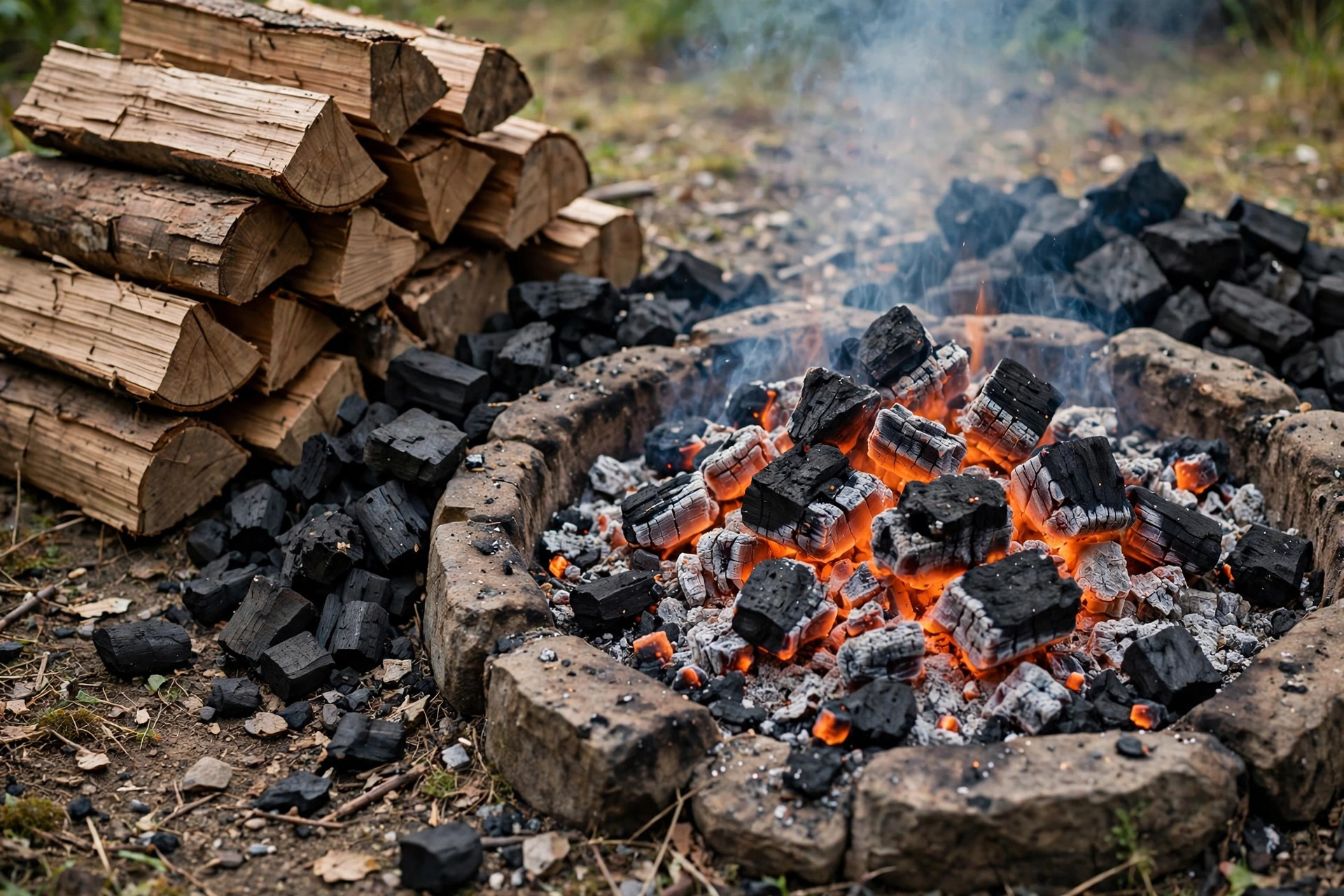
Choosing Wood and Charcoal for Fire Cooking
Learn how lump charcoal, briquettes, and hardwood differ, and how to match fuel to each fire-cooked meal.
· 4 min read